

ChartDB only reads your database schema metadata. It does not access your actual data.
Key Benefits
One-Click Authentication
Connect with your Supabase account using OAuth - no connection strings needed
Automatic Sync
Your schema automatically syncs every hour to stay up-to-date
No Credential Management
No need to manually manage or store database credentials
Live ERD Diagrams
Visual diagrams that stay in sync with your Supabase database
Connect Your Supabase Database
1
Create New Diagram
From the ChartDB homepage, click New Diagram to open the diagram creation dialog.
2
Select Supabase Database
In the database selection screen, choose Supabase (the green lightning bolt icon), then click Continue.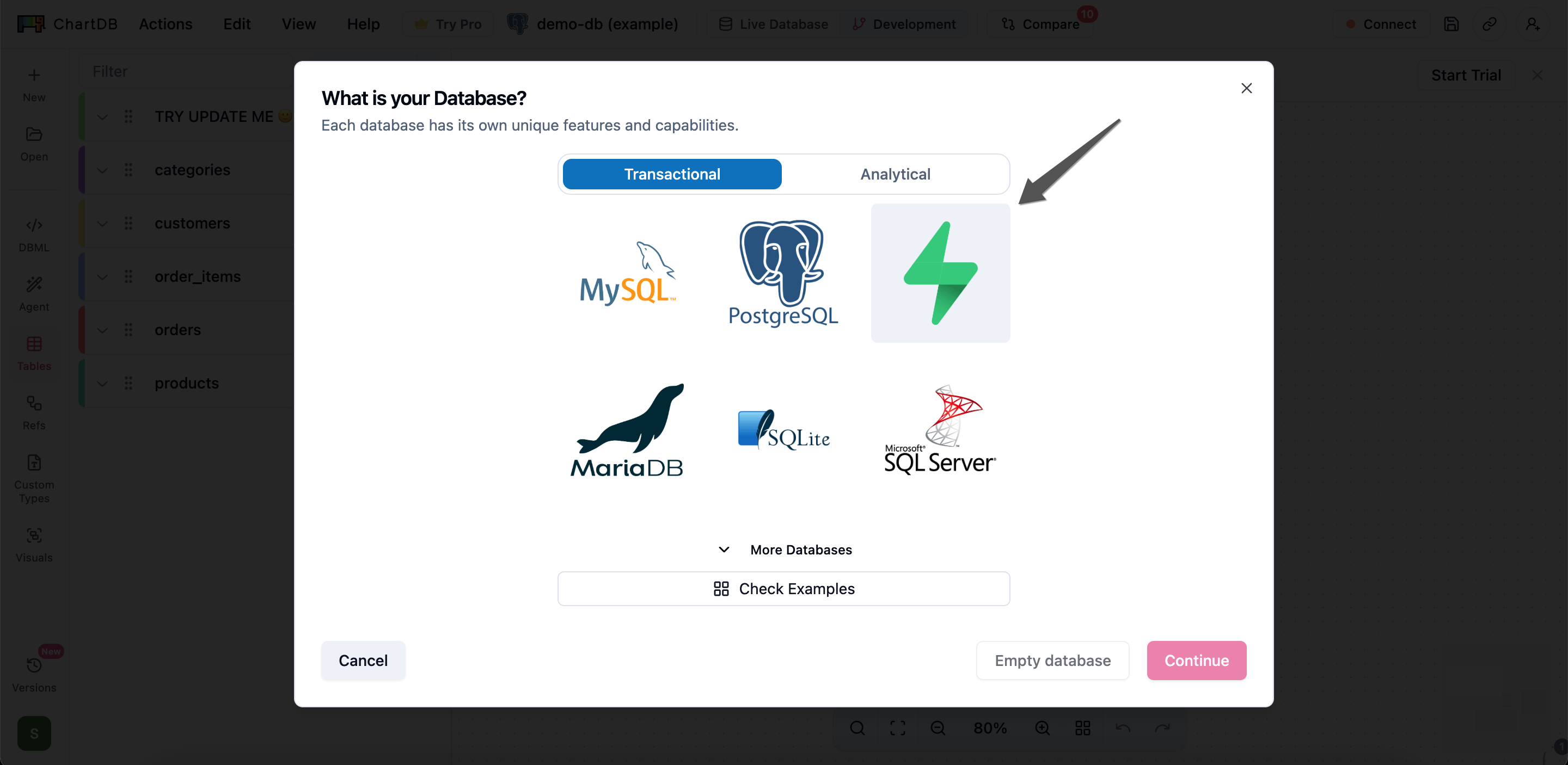
3
Choose Cloud Platforms Connection
On the import method screen, select Cloud Platforms which shows the OAuth option with BigQuery, Snowflake, and Supabase logos.
4
Connect with Supabase
Click the Connect with Supabase button to initiate the OAuth flow.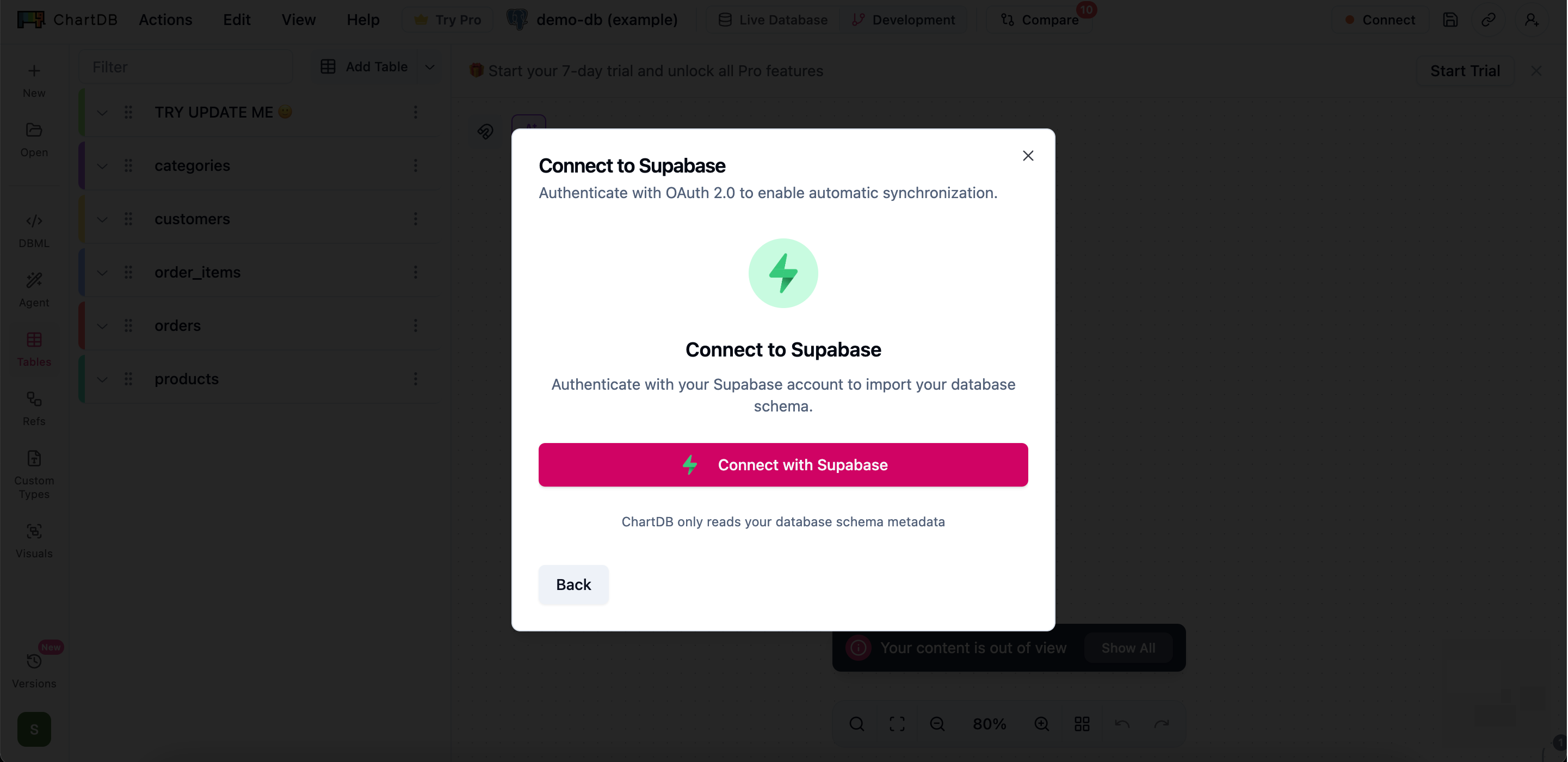
5
Authenticate in Popup
A popup window will open directing you to the Supabase authentication page. Log in with your Supabase account credentials and authorize ChartDB to access your projects.
Make sure popups are enabled for ChartDB in your browser.
6
Select Project and Enter Password
After successful authentication, you’ll see a list of your Supabase projects. Select the project you want to visualize.Each project card shows: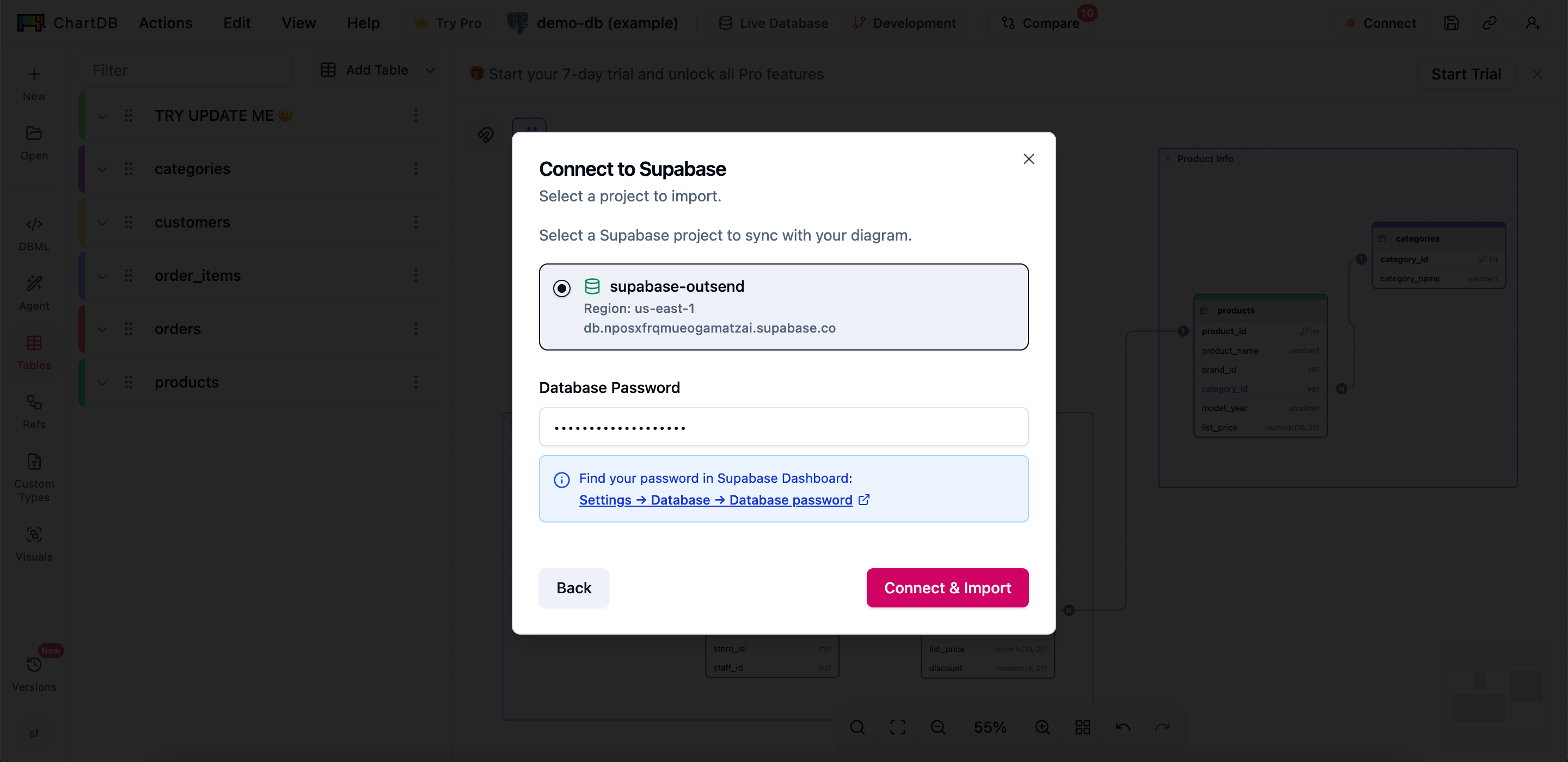
- Project name
- Region
- Database host
Where to find your password: Click the link in the info box to go directly to your Supabase Dashboard: Settings > Database > Database password
7
Connect & Import
Click Connect & Import to start the synchronization process. You’ll see a loading screen while ChartDB imports your schema metadata.
8
View Your Diagram
Once complete, you’ll see a success message. ChartDB will automatically redirect you to your new diagram showing your Supabase database schema.
Re-syncing Your Database
Your Supabase database automatically syncs every hour. You can also manually trigger a re-sync at any time.Quick Re-sync from Toolbar
1
Open Connection Status
On your diagram page, click the Connected button (with a green cloud icon) in the top navigation bar.
2
Trigger Re-sync
In the popup, you’ll see: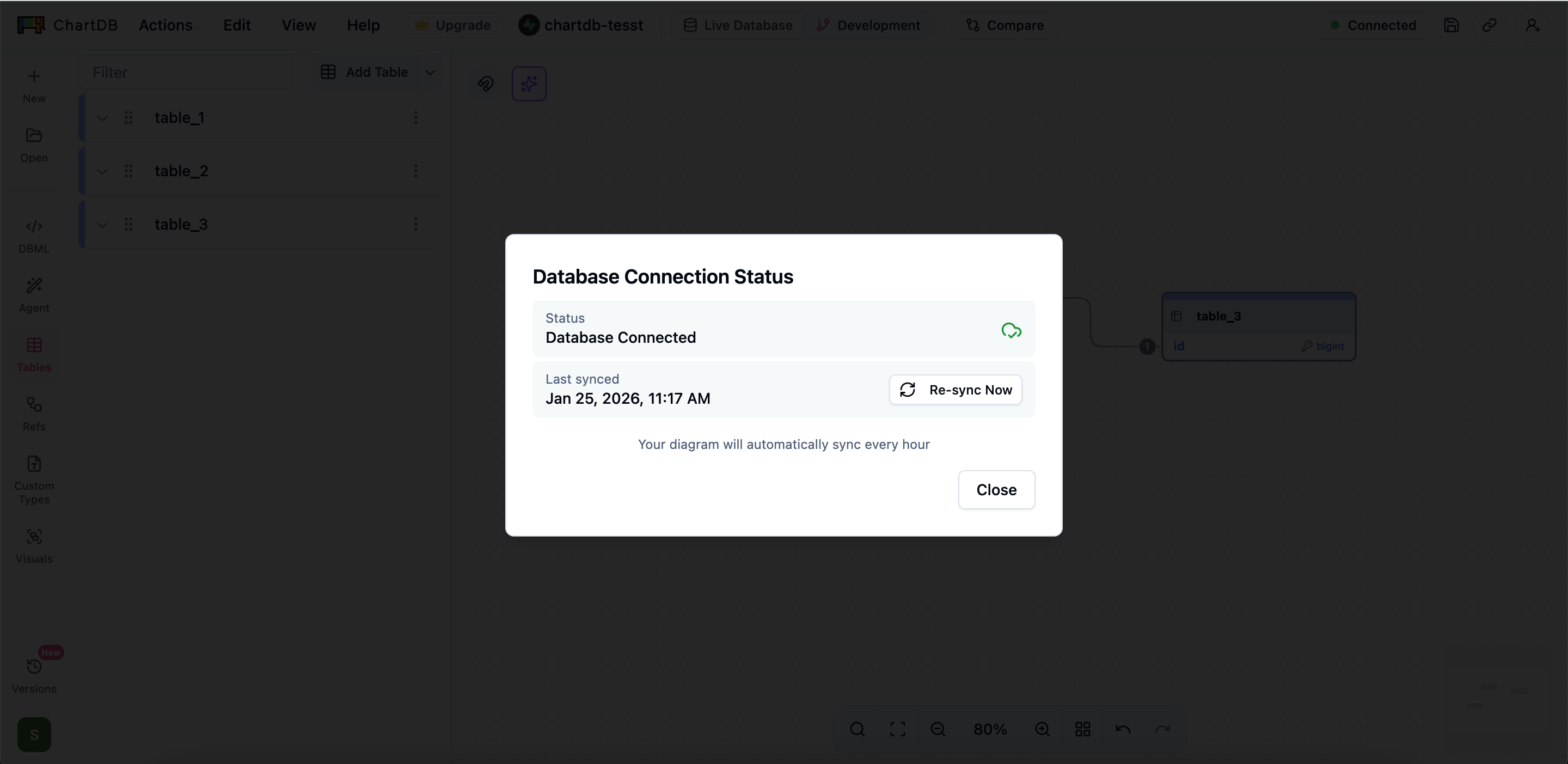
- Database Connected status with green checkmark
- Last synced timestamp
- Re-sync Now button
3
View Updated Diagram
The page will reload with your updated schema.
Full Re-sync from Database Settings
- Click Sync or the database settings option from the diagram menu
- The Supabase sync dialog will appear showing you’re already connected
- Click Re-Sync Now to refresh your schema
Troubleshooting
Invalid Password Error
Invalid Password Error
If you see an “Invalid password” error:
- Go to your Supabase Dashboard
- Navigate to your project’s Settings > Database
- Copy your database password (or reset it if needed)
- Re-enter the correct password in ChartDB
Connection Failed
Connection Failed
If OAuth connection fails:
- Ensure you’re logged into Supabase
- Check that your Supabase project is active (not paused)
- Allow popups for ChartDB in your browser
- Try again by clicking “Connect with Supabase”
Projects Not Loading
Projects Not Loading
If your projects don’t appear after authentication:
- Click Retry to refresh the project list
- Verify your Supabase account has at least one active project
- Check that your Supabase organization permissions allow API access